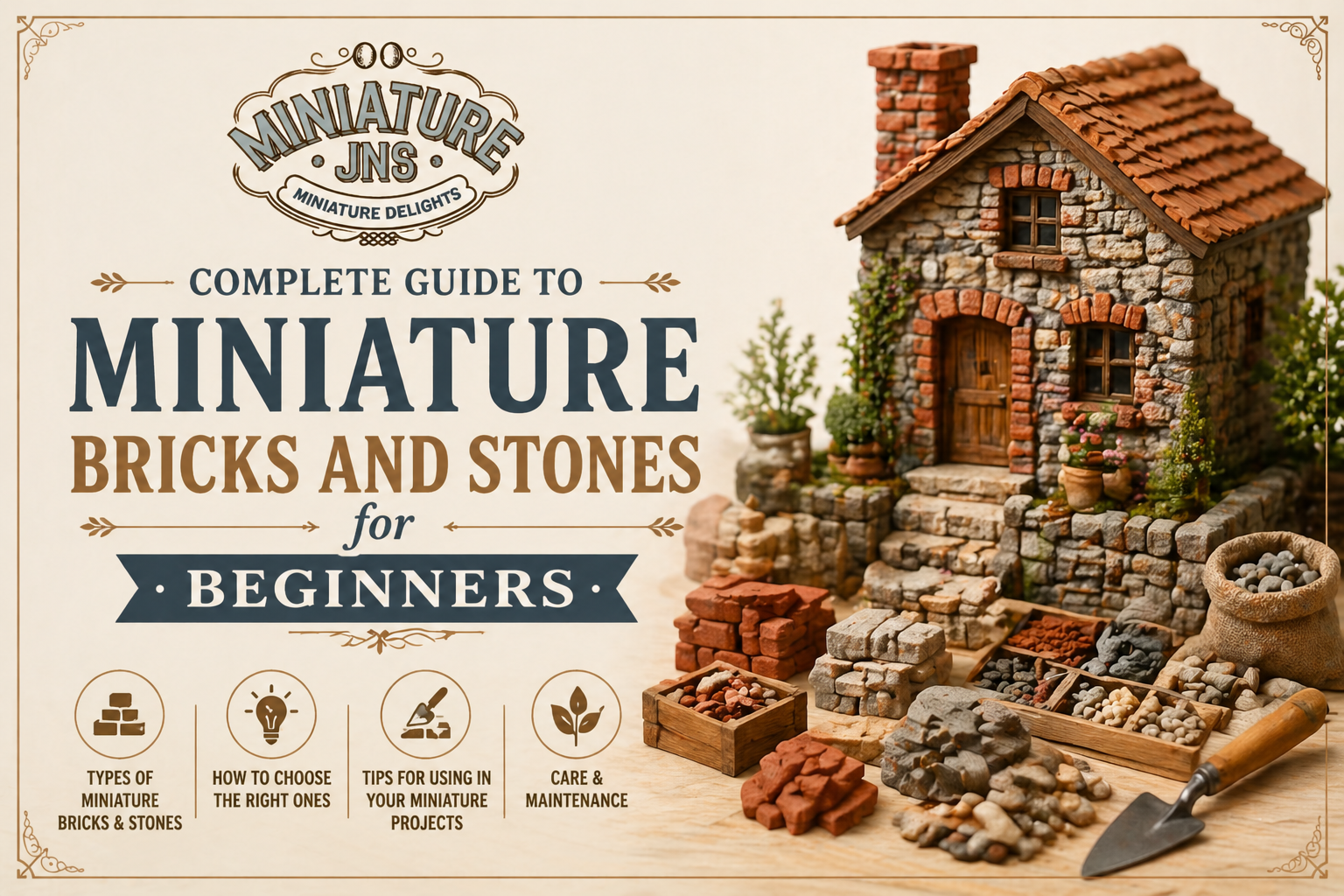
Miniature crafting is a unique and creative hobby that allows you to build tiny versions of real-world structures. It combines imagination, patience, and artistic skill to create detailed small-scale environments. Many beginners are drawn to this hobby because it is relaxing and highly satisfying once results start to take shape.
This Complete Guide to Miniature Bricks and Stones for Beginners is designed to help new learners understand the basics, materials, and techniques needed to start building realistic miniature scenes without confusion.
Understanding the World of Miniature Crafting
Miniature modeling is all about recreating real-life objects in a reduced scale while maintaining their realistic appearance. It can include houses, streets, gardens, or even entire fantasy worlds. The key to success in this hobby is observation and attention to detail.
Beginners often start with simple projects such as small rooms or basic outdoor scenes. As skills improve, they gradually move toward more complex structures that require better precision and planning. Many hobbyists also take inspiration from creative communities such as Miniature JNS, which provides ideas and motivation for building detailed miniature environments.
Choosing the Right Materials
Start by checking the exact brick or stone product’s material, piece dimensions, thickness and pack contents. Separate individual-piece measurements from stated coverage or package size, and compare the usable coverage with the wall or path you plan to build.
Choose a supporting surface and adhesive that the relevant makers identify as compatible. Follow their preparation, application and curing instructions; if they call for a test, use a spare offcut before attaching pieces to the scene. Do not assume that one glue or base material suits every miniature brick or stone product.
Role of Miniature Bricks and Stones in Modeling
One of the most important elements in miniature architecture is the use of Miniature Bricks and Stones. These small components play a major role in adding realism to any model. They are commonly used for building walls, pathways, and structural details that closely resemble real construction.
When placed carefully, they create depth and texture that make a miniature scene feel alive. Beginners should focus on learning how spacing and alignment affect the final appearance. Even a small adjustment can change the entire visual outcome of a model.
Creating Your First Miniature Project
Starting your first project can feel challenging, but keeping it simple is the best approach. A small house or garden setup is usually ideal for beginners. The process begins with sketching a basic design and then building a foundation using foam or cardboard.
Once the base is ready, walls and structures are gradually added. After that, details such as doors, windows, and decorative elements bring the model to life. Painting and finishing touches are added at the end to enhance realism. The most important part of this stage is patience, as rushing can lead to mistakes.
Adding Realism Through Details
Details are what make miniature models truly impressive. Techniques such as shading, layering, and dry brushing help create depth and texture. Slight color variations can make surfaces appear more natural and aged.
Lighting also plays an important role in presentation. Proper lighting highlights textures and gives the model a more realistic and professional look. Many hobbyists use display cases to protect their work while showcasing it effectively.
Essential Tools for Beginners
Working on miniature models requires precision, so having the right tools is very important. Sharp cutters help with accurate shaping, while fine brushes allow detailed painting. Tweezers are useful for placing small parts carefully, and sculpting tools help in shaping complex designs.
Keep wall measurements and openings with your miniature project plan. Before choosing a brick or stone product, use our listing-reading checklist to separate confirmed package contents and coverage from details that still need a source.
Measuring tools also ensure that proportions remain accurate throughout the project. With practice, these tools become extensions of your creativity.
Learning Through Experience
Miniature crafting improves with consistent practice. Early projects may not look perfect, but each attempt teaches valuable lessons. Over time, skills such as precision, design planning, and creativity naturally improve.
Exploring different styles and experimenting with new ideas helps develop a unique approach to miniature modeling. Inspiration from platforms like Miniature JNS can also guide beginners toward more creative and structured designs.
Advanced Creative Possibilities
As skills develop, hobbyists often move on to more complex projects. These can include historical buildings, fantasy landscapes, or detailed city environments. At this stage, combining different materials becomes important to achieve realistic effects.
Advanced models often include elevation changes, lighting effects, and mixed textures to create depth and visual interest. This is where creativity becomes the most important skill in miniature crafting.
Conclusion
Miniature crafting is more than just a hobby; it is a form of artistic expression that allows you to build entire worlds in small scale. With patience, practice, and imagination, anyone can create beautiful and detailed miniature scenes.
By understanding materials, practicing techniques, and exploring creative ideas, beginners can gradually improve and enjoy this rewarding craft. The journey of learning is just as valuable as the final result, making miniature modeling a truly fulfilling experience.
Planning quantities for a wall or path? Use our guide to estimating miniature brick and stone coverage to separate surface area, openings and usable product coverage before ordering.
