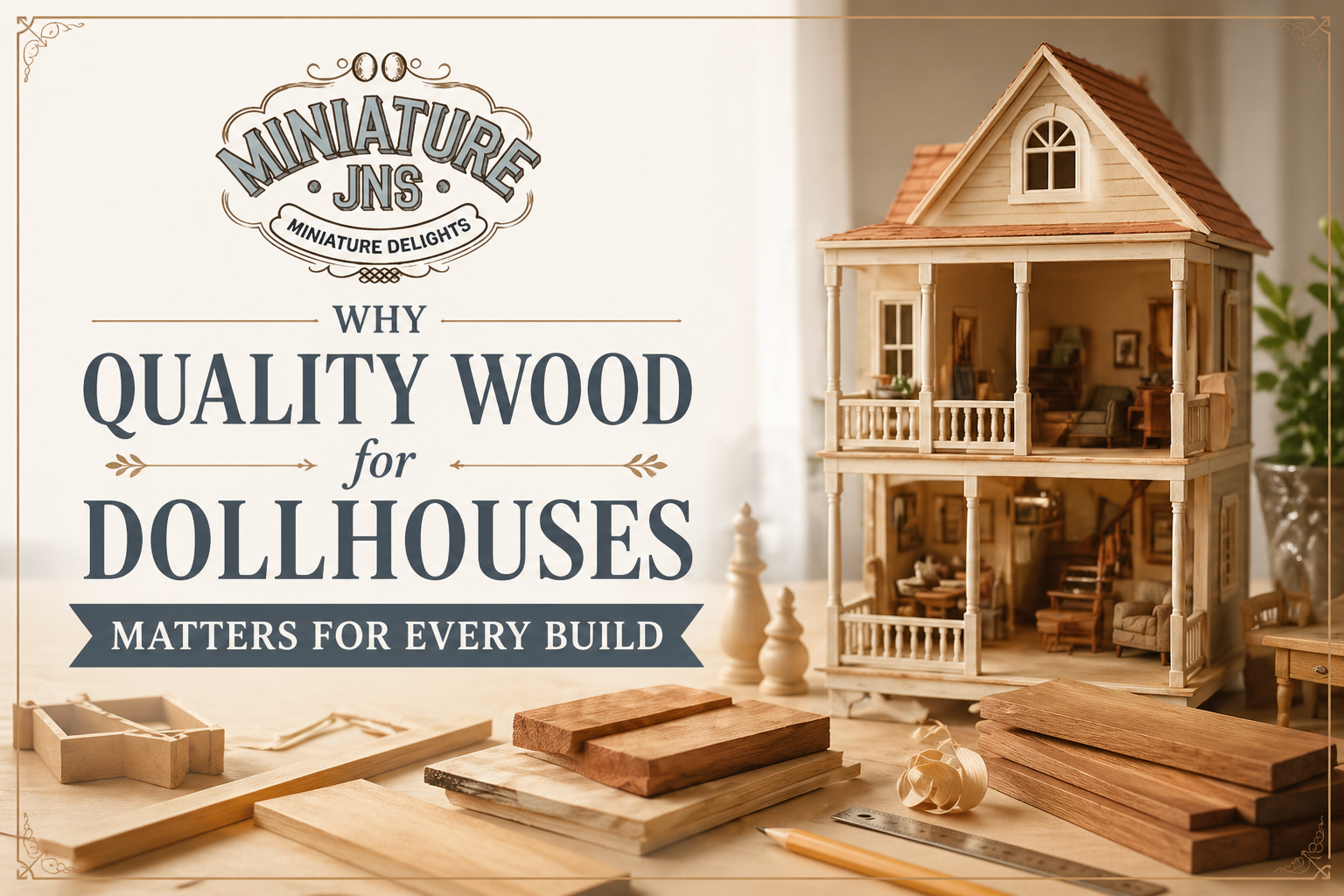
When choosing wood for dollhouses, start with the requirements of your particular build. Record its intended dimensions, construction method and use, then compare the exact material’s supplied specifications. A general “quality” or “premium” label does not replace that information.
The Foundation of a Durable Dollhouse
Wood’s response to moisture is one reason to check the material and its intended use carefully. The USDA Forest Products Laboratory’s Wood Handbook chapter on moisture and physical properties explains that wood exchanges moisture with its surroundings and that moisture conditions influence performance. That general information does not establish the behaviour of a particular miniature product.
Compare the kit or design’s required measurements with the actual sheet, strip or component dimensions. Confirm the intended joints and any missing specifications before assuming that the parts will fit. A price or grade label is not a fit guarantee.
Enhancing Aesthetic Appeal
If appearance matters, ask for clear information about the supplied surface and any relevant grading description. Decide which faces will remain visible and which will receive a finish before selecting the material.
Keep appearance separate from preparation requirements. A smooth-looking photograph does not confirm actual thickness, construction or compatibility with an intended finish.
For miniature builders, compare the material’s stated specifications with the requirements of the project. Check actual thickness, surface condition and maker instructions before planning cuts or finishes.
Precision in Crafting and Assembly
For miniature wood and building supplies, confirm the exact material, actual measurements and maker’s guidance for the cutting, joining or finishing process you intend to use.
Before ordering building material, use the miniature listing checklist to confirm what the exact item supplies and which dimensions are stated. Keep those specifications beside the physical measurements in your project room plan.
Before committing to a joint or detailed cut, consult the design and material instructions for the exact thickness and construction. Ask about missing preparation or tool requirements rather than assuming that any material will give a clean cut or seamless fit.
Keep a brief material record with its stated type, dimensions, quantity and source date. Separate what the maker confirms from assumptions that still need checking.
Longevity and Durability
For a long-term display, obtain handling and storage guidance for the supplied material. The USDA Wood Handbook’s chapter on drying and moisture control explains how drying, handling and storage can limit moisture changes after drying. It does not provide a guaranteed lifespan for a miniature build.
Do not turn a quality label into a promise of resistance to moisture, temperature changes or wear. Compare the maker’s documented limits with the conditions in which you intend to keep the finished project.
For collectors and builders browsing Miniature JNS, the useful comparison is between documented material specifications and project needs. A brand name or price alone does not establish a durability guarantee.
Safety Considerations for Children’s Dollhouses
A price or “premium wood” label does not establish that a dollhouse, sheet material, adhesive or coating is suitable for a child. Confirm the intended use, stated age guidance and maker’s warnings for the exact kit and materials.
Check the included parts and the maker’s handling and assembly requirements rather than assuming that a collector miniature is a toy. This guide does not certify the chemical safety, coating or age suitability of an individual product.
If the relevant product information is missing, ask the maker for clarification before selecting it for the intended user.
Supporting Creative Customization
Customization can change what information you need from the supplier. Decide which surfaces will remain visible and what layers, adhesives or finishes are proposed before choosing the base material.
Before painting, gluing or adding wallpaper, roofing or flooring, identify the exact base material and any existing coating. Follow the material and adhesive or finish makers’ preparation and compatibility instructions. A photograph or a “premium” label does not establish that a particular combination is suitable.
Without the right material, even the most creative ideas can fall short due to technical limitations.
Sustainability and Eco-Friendly Choices
If responsible sourcing matters to your project, ask what species or composite material is supplied and what current sourcing information is available for that exact product.
An environmental or sourcing claim needs supporting documentation. The Miniature JNS name, a category label or a higher price does not by itself establish sustainable sourcing or a particular production practice.
Keep any supporting document, its date and the exact product identity together. Do not treat a sourcing claim as a guarantee about strength, appearance or service life.
Better Value for Money
Compare price together with the exact sheet or strip size, included quantity and documented preparation requirements. These details make options easier to compare than a broad “premium” label.
List any separately required materials and resolve missing measurements before estimating the supplies for your build. A higher purchase price alone does not prove lower future costs or a longer service life.
Conclusion
The importance of quality wood in dollhouse construction cannot be overstated. It influences every aspect of the build—from structural strength and aesthetic appeal to safety, durability, and creative freedom. Whether you are a beginner or an experienced builder, choosing the right material is the foundation of success.
When comparing building supplies, keep the exact product identity, documented material and actual dimensions with your project plan. Resolve missing specifications before choosing a material for a particular joint, finish or display condition.
Choose wood using documented material information and measurements, then keep the maker’s handling and assembly instructions with the project. Clear specifications provide a more useful starting point than an unverified quality promise.
