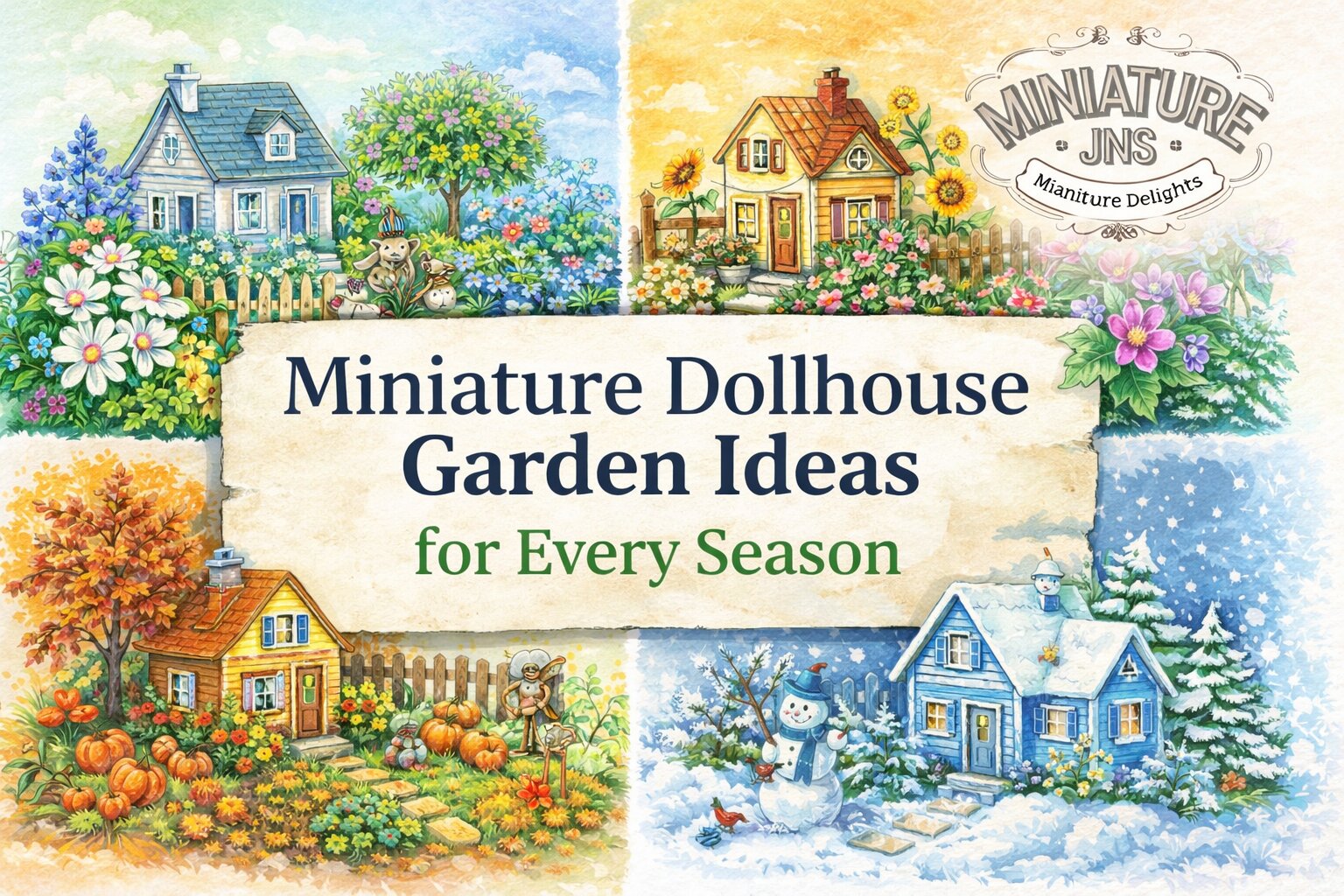
A dollhouse does not truly feel complete until the outside is just as beautiful as the inside. While interiors often get all the attention, a thoughtfully designed miniature garden can completely transform your dollhouse into a living, breathing scene. It adds color, personality, and a sense of time, making your miniature world feel dynamic instead of static.
The best part is that your garden does not have to stay the same all year. Just like real homes, your dollhouse garden can change with the seasons. With a few creative adjustments, you can refresh your outdoor space again and again.
Here is a detailed guide to designing miniature dollhouse gardens for every season.
Why a Seasonal Garden Makes a Difference
Before diving into ideas, it helps to understand why seasonal design matters.
A seasonal garden:
- Keeps your dollhouse visually fresh
- Allows you to experiment with new styles
- Adds storytelling to your miniature scenes
- Makes your display feel more realistic
Instead of one fixed setup, your garden becomes something that evolves over time.
Spring: Fresh, Bright, and Full of Life
Spring is all about renewal. It is the perfect time to introduce soft colors, blooming flowers, and a sense of new beginnings.
Design ideas for spring:
- Add miniature flower beds with tulips, daisies, or roses
- Use pastel-colored pots and planters
- Place a small watering can or gardening tools nearby
- Include a wooden bench surrounded by greenery
You can also create a small “planting scene” with tiny soil patches and seed trays to give the feeling that the garden is just coming to life.
Color palette: Soft pinks, light greens, pale yellows, and gentle whites
Spring gardens should feel light, airy, and full of possibility.
Summer: Lush, Vibrant, and Full of Activity
Summer is when your garden is at its peak. Everything is bright, colorful, and full of energy.
Design ideas for summer:
- Add full, leafy plants and vibrant flowers
- Include outdoor seating like a patio set or lounge chairs
- Create a picnic scene with miniature baskets and foods
- Add string lights or lanterns for a cozy evening feel
You can also design a small outdoor dining area or barbecue setup to bring a sense of activity and gathering.
Color palette: Bright greens, bold reds, sunny yellows, and rich blues
Summer gardens should feel lively, inviting, and full of movement.
Autumn: Warm, Cozy, and Full of Texture
Autumn brings a shift in tone. The garden becomes softer, warmer, and more textured.
Design ideas for autumn:
- Scatter miniature fallen leaves across the ground
- Add pumpkins, baskets, or harvest décor
- Use wooden crates or barrels for a rustic feel
- Include a small seating area with blankets or cushions
You can create a cozy corner where your miniature family might sit and enjoy the crisp air.
Color palette: Warm oranges, deep reds, golden yellows, and earthy browns
Autumn gardens should feel calm, comforting, and slightly nostalgic.
Winter: Simple, Elegant, and Peaceful
Winter gardens are quieter but just as beautiful. Simplicity becomes the focus.
Design ideas for winter:
- Add a light dusting of artificial snow
- Include bare trees or frosted plants
- Place a small bench or pathway with snow accents
- Add subtle decorations like wreaths or lanterns
You can also create a festive holiday version by adding lights or seasonal décor.
Color palette: Whites, silvers, soft blues, and deep greens
Winter gardens should feel peaceful, clean, and slightly magical.
Key Elements That Work Year-Round
While seasonal changes bring variety, some elements remain essential throughout the year.
1. Pathways and Walkways
Mini stone paths, wooden planks, or gravel walkways guide the eye and structure your garden. They create flow and make the space feel intentional.
2. Garden Furniture
Benches, chairs, and small tables provide focal points and make the garden feel usable. You can easily update them with seasonal accessories.
3. Planters and Pots
Planters are one of the easiest ways to switch between seasons. Simply change the plants or colors inside them to match the time of year.
For decorative greenery in an indoor scene, use our miniature plant display guide to check each piece’s stated materials and attachment guidance.
4. Fencing and Borders
A small fence or hedge defines the space and frames your garden beautifully. It adds structure and makes the layout feel complete.
Creative Ways to Switch Between Seasons
You do not need to rebuild your garden each time. With a few smart choices, seasonal updates can be quick and simple.
Try this approach:
- Keep your base layout the same
- Swap out plants and accessories
- Change color accents
- Add or remove seasonal details like leaves or snow
You can store seasonal pieces in small containers and rotate them throughout the year.
Adding Realism Through Small Details
The magic of a miniature garden lies in the details.
Consider adding:
- Tiny watering cans
- Garden tools like rakes or shovels
- Small lanterns or lights
- Mini birds, butterflies, or decorative elements
Even a few carefully placed accessories can make the garden feel alive.
Balancing Scale and Space
Because garden areas are often small, it is important to maintain balance.
Use the room-planning method to record the garden base and the space available for containers and furniture. An inventory of your miniature pieces helps you track the exact source and storage location of items moved between displays.
Avoid:
- Overcrowding with too many items
- Using oversized plants
- Mixing scales that do not match
Leave space for pathways and open areas. A well-balanced garden feels more realistic and visually pleasing.
A miniature dollhouse garden is more than decoration. It is an extension of your creativity and storytelling. By designing your garden around the seasons, you create a space that feels dynamic, engaging, and full of life.
From the soft blooms of spring to the quiet beauty of winter, each season brings its own charm. With thoughtful planning and attention to detail, your miniature garden can evolve throughout the year, just like a real one. Take your time, experiment with different ideas, and enjoy the process of bringing your outdoor miniature world to life.
