
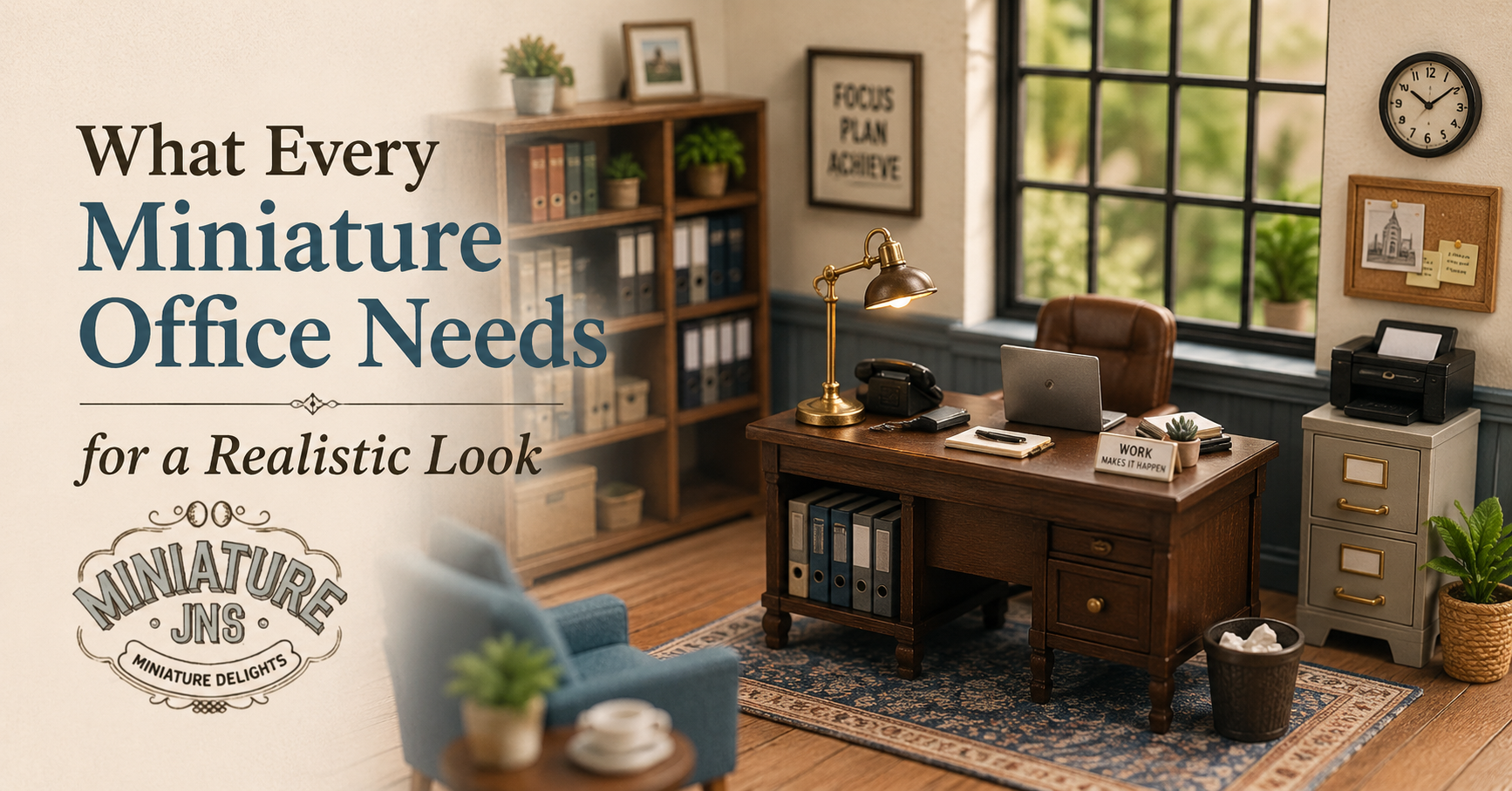
A miniature office can be one of the most interesting rooms to design. It can look calm, busy, classic, modern, or full of character, depending on the pieces you choose. A small office scene is not only about placing a desk and chair in a tiny room. It is about creating a space that feels like someone works there, thinks there, writes there, and spends time there.
A realistic miniature office needs balance. It should have the right furniture, useful details, proper spacing, and a clear style. When everything works together, the room feels natural. The viewer can look at it and imagine the person who uses the space. Maybe it belongs to a writer, a lawyer, a teacher, a business owner, or a home worker. Each choice helps tell that story.
Miniature JNS offers pieces that can help collectors build small rooms with more life and detail. When you choose items carefully, even a tiny office can feel complete, warm, and believable.
Start With the Main Office Pieces
The first thing every miniature office needs is a strong main setup. This usually begins with a desk and chair. These two pieces shape the whole room because they show where the work happens. The desk should fit the size of the room and leave enough space around it. If the desk is too large, the room can feel crowded. If it is too small, the office may look empty.
A good desk can create the main style of the room. A dark wooden desk may give the office a serious and classic look. A light desk may make the space feel fresh and simple. A small writing desk can work well for a home office, while a larger desk can suit a business or study room.
The chair is also important. It should look comfortable and match the desk. A strong office chair can make the room feel professional. A simple wooden chair can make the room feel older or more traditional. When the chair and desk match in size and style, the whole scene looks more real.
This is where miniature office furniture becomes important. A desk, chair, bookcase, cabinet, or side table should not feel random. Each piece should support the room’s purpose. If the office is for a writer, a desk and bookshelves may be enough. If it is for a business owner, the room may need storage, guest chairs, and a more formal look.
The main pieces should be placed before the smaller details. Once the basic layout feels right, it becomes easier to add character. Think about how a real person would move in the room. There should be space to sit, reach the desk, open a cabinet, or walk around. Even in miniature form, this makes the office feel natural.
Add Details That Show Daily Work
After the main pieces are in place, the room needs small details. These details are what make the office feel used. A clean desk can look nice, but it may also feel empty. A few papers, books, a lamp, or a small clock can make the space feel active.
The desk is the best place to begin. You can add a tiny notebook, a pen, an envelope, or a stack of papers. These items show that work is happening. A small phone, computer, or typewriter can also help set the time period of the office. A modern office may need a laptop and simple décor. An old-style office may need books, letters, and a classic desk lamp.
Miniature office accessories can bring a lot of life to the room. These small items help explain who uses the office and what kind of work they do. A few books can suggest study or writing. A tiny calendar can show planning. A framed picture can make the office feel personal. A small plant can soften the room and make it look more welcoming.
It is important not to add too much at once. A realistic office does not need every possible item. Too many small pieces can make the room feel messy. Choose details that make sense for the story you want to show. If the office belongs to a busy person, a few papers on the desk may look right. If the office is formal, the desk may be neat with only one or two items.
Small items also help create scale. When a tiny cup, book, or lamp sits on a desk, the viewer can better understand the size of the furniture. This makes the whole room feel more believable.
Use Storage, Walls, and Lighting
A real office usually has storage. This may include shelves, drawers, filing cabinets, or bookcases. Storage pieces help fill the room in a useful way. They also give you places to display more details without crowding the desk.
A bookcase can make an office feel smart and complete. It can hold books, boxes, files, and small decorative items. A cabinet can make the room feel more practical. A side table can hold a lamp, plant, or extra papers. These pieces help the room look like it has been used over time.
Walls are also important. Many beginners focus only on the floor and forget the walls. But wall details can make a big difference. A framed picture, clock, certificate, map, or small shelf can make the room feel finished. Empty walls can work in some styles, but most offices look better with at least one or two wall pieces.
Lighting helps set the mood. A desk lamp can make the work area feel active. A floor lamp can make the office feel warm. A ceiling light can give the room a more complete look. Even if the light does not work, the shape of the lamp can still add realism.
Color should also be considered. A serious office may use dark wood, brown, cream, or deep green. A simple home office may use lighter colors. A creative office may include brighter details. The colors should not fight each other. A calm color plan helps the room feel more organized.
Miniature JNS can be a helpful source when looking for pieces that match the same room style. Matching does not mean everything has to be the same color. It means the pieces should feel like they belong in the same space.
Create a Story With Placement
A realistic miniature office should tell a small story. The way you place items can make the room feel alive. A chair pulled slightly away from the desk can suggest that someone just left. An open book can show that someone was reading. A cup on the side of the desk can make the space feel personal.
Placement should feel natural. In a real office, people keep useful items close to where they work. A lamp should be near the desk. Books may be near a chair or shelf. Papers may sit on the desk or inside a cabinet. A plant may be placed near a window or on a side table. When items are placed where they make sense, the room feels more real.
This is also where miniature office furniture can help build the full scene. The right pieces give the room structure, while the smaller details give it personality. A strong layout makes the office easy to understand. The viewer should quickly see where the person works, where items are stored, and what kind of room it is.
Miniature office accessories should be chosen with care near the end of the setup. Once the main layout is finished, you can see what the room still needs. Maybe the desk needs a lamp. Maybe the wall needs a frame. Maybe the shelf needs books. Adding details slowly helps keep the scene balanced.
A miniature office does not need to be perfect to look realistic. In fact, a few natural touches can make it better. A slightly uneven stack of papers, a chair turned a little, or a small book left open can make the scene feel lived in. These small choices give the room charm.
In the end, every miniature office needs purpose, balance, and detail. Start with the main furniture, add useful work items, use storage and wall décor, and place each piece in a way that tells a story. When these parts come together, the office becomes more than a small room. It becomes a tiny space that feels real, thoughtful, and full of character.
