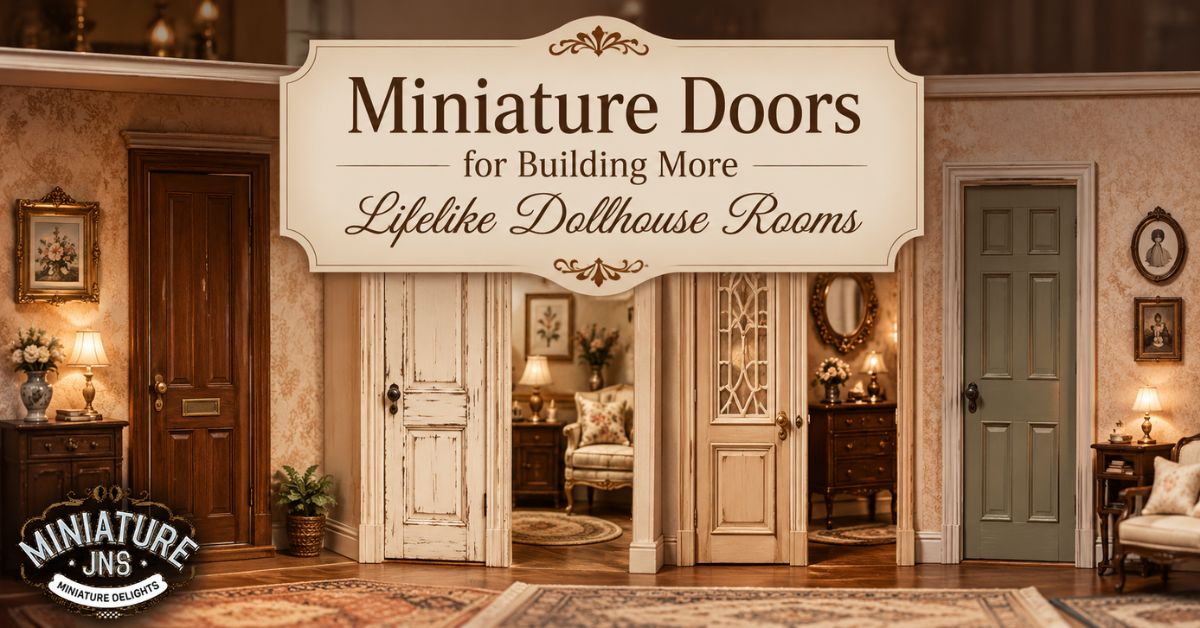
A door is one of the easiest things to overlook when you build a dollhouse room. Most collectors start with furniture. They think about the sofa, the bed, the kitchen table, or the shelf on the wall. But once the furniture is in place, something still feels missing. Very often, that missing piece is the door.
Miniature JNS carries a wide range of pieces for collectors who want their rooms to feel finished and believable. A well-chosen door is one of the simplest upgrades you can make, and it changes far more than most people expect.
Why Doors Change the Way a Room Feels
Think about how you look at a real room. Your eye moves toward openings. A window pulls attention outward. A door suggests movement, arrival, and departure. It hints that the room is used, and that someone walks in and out of it every day.
In miniature form, that same effect works. A room with a closed door feels private and settled. A room with a slightly open door feels active, as if someone just stepped out. A room with a wide-open door invites the viewer to look through and imagine the next space, even when there is nothing behind it.
Doors also give a room proportion. Furniture alone can be hard to read. A chair is a chair whether it sits in a large hall or a tiny study. But a door is a familiar size in real life. When a viewer sees a door in a miniature room, they instantly understand how tall the ceiling is and how big the furniture must be. That single reference point makes everything else look more correct.
There is a structural benefit too. Many roomboxes and open-back dollhouses have flat, bare walls that look unfinished. Adding a door — even one that never opens — breaks up that blank surface and gives the wall a reason to exist. The wall stops being a background and becomes part of the architecture.
Choosing the Right Door Style for Each Room
Not every door suits every room. The style you choose sends a message about the age, class, and mood of the house, so it is worth slowing down at this step.
A heavy panelled wooden door suits a formal study, a dining room, or an older home. It suggests solid construction and a sense of history. A plain flush door suits a modern apartment or a simple cottage. A door with a glass panel works beautifully for a kitchen, a shop, or a room that opens onto a garden, because it lets light and sightlines pass through.
Interior and exterior doors should not be treated the same way. An exterior door is usually thicker, more decorative, and often paired with a fanlight, sidelights, or a small porch. An interior door is lighter and simpler. Using an exterior-style front door inside a bedroom is a common mistake, and it makes the room feel slightly wrong even when the viewer cannot say why.
You can explore a range of styles in the miniature doors collection and match them to the period of the house you are building. If your dollhouse is Victorian, look for detail and moulding. If it is mid-century, look for clean lines. Consistency across the whole house matters more than any single beautiful door.
Getting the Scale and Fit Right
Choose the door’s stated scale as a starting point, then confirm the measurements of the exact item. A scale label or a typical door height does not establish that its frame will fit your wall.
Record the wall opening’s width and height, the wall thickness, and the space around it. Ask the seller to distinguish the required cutout from the outside frame dimensions and any usable doorway dimensions, with units and width/height/depth identified. Confirm whether trim, glazing and hardware are included and whether the door is designed to open.
Use our guide to reading miniature listings to keep those measurements separate, and record the verified details in your dollhouse room plan.
Follow the exact door maker’s installation instructions before altering the wall. Confirm the required opening, frame depth, swing clearance and any recommended fitting allowance. If those details are missing, obtain them before cutting; do not assume trim will hide a mismatch or that a generic frame-depth rule applies to every construction.
Hardware, Trim, and Finishing Touches
An unfinished door can remain raw for the scene you are planning. If you want to add a finish, first confirm the exact door’s material, existing surface treatment and maker’s preparation instructions.
Do not assume every factory-made door should be sanded or stained. Choose compatible preparation and finishing products for the documented material, follow their application instructions, and protect glazing, delicate details and moving joints as directed. The number of coats and any sanding between them depend on the particular product and surface.
Knobs, handles, hinges and keyhole details can complete the door’s appearance, but check their actual size and attachment requirements against its construction. Plan handle placement on the model rather than applying one fixed height to every door. Confirm whether hardware is supplied, sold separately, decorative or functional before choosing from the miniature hardware collection.
Trim finishes the job. Casing around the frame, a threshold at the base, and a small section of skirting board that meets the frame neatly will lift the whole wall. Where doors and windows share a room, use matching trim on both so the architecture reads as one design. For more ideas on coordinating the exterior, see our guide to dollhouse facades with windows and doors.
Placement, Openness, and Storytelling
Once the door is built and finished, decide what it is doing in the scene. This is the part collectors enjoy most, because it turns carpentry into storytelling.
A closed door can suggest privacy, while an ajar door can suggest movement. Use an open position only if the exact model is designed to move and there is room for its swing; do not force a fixed panel. A glimpse of a printed hallway or a small furnishing beyond the opening can add depth without relying on a prescribed gap measurement.
Doors near windows help too. A door on one wall and a window on another gives the room natural circulation and lets you play with light. If your room has a light source, position it so a soft shadow falls through the doorway. That single touch does more for realism than a dozen extra accessories.
A miniature door is a small object with a big job. It sets scale, defines the architecture, finishes bare walls, and quietly suggests that life continues beyond the edge of the scene. Choose the style to match your house, measure carefully, finish it properly, add real hardware, and place it with intention. Do those five things and your rooms will stop looking like arrangements of furniture and start looking like homes.
