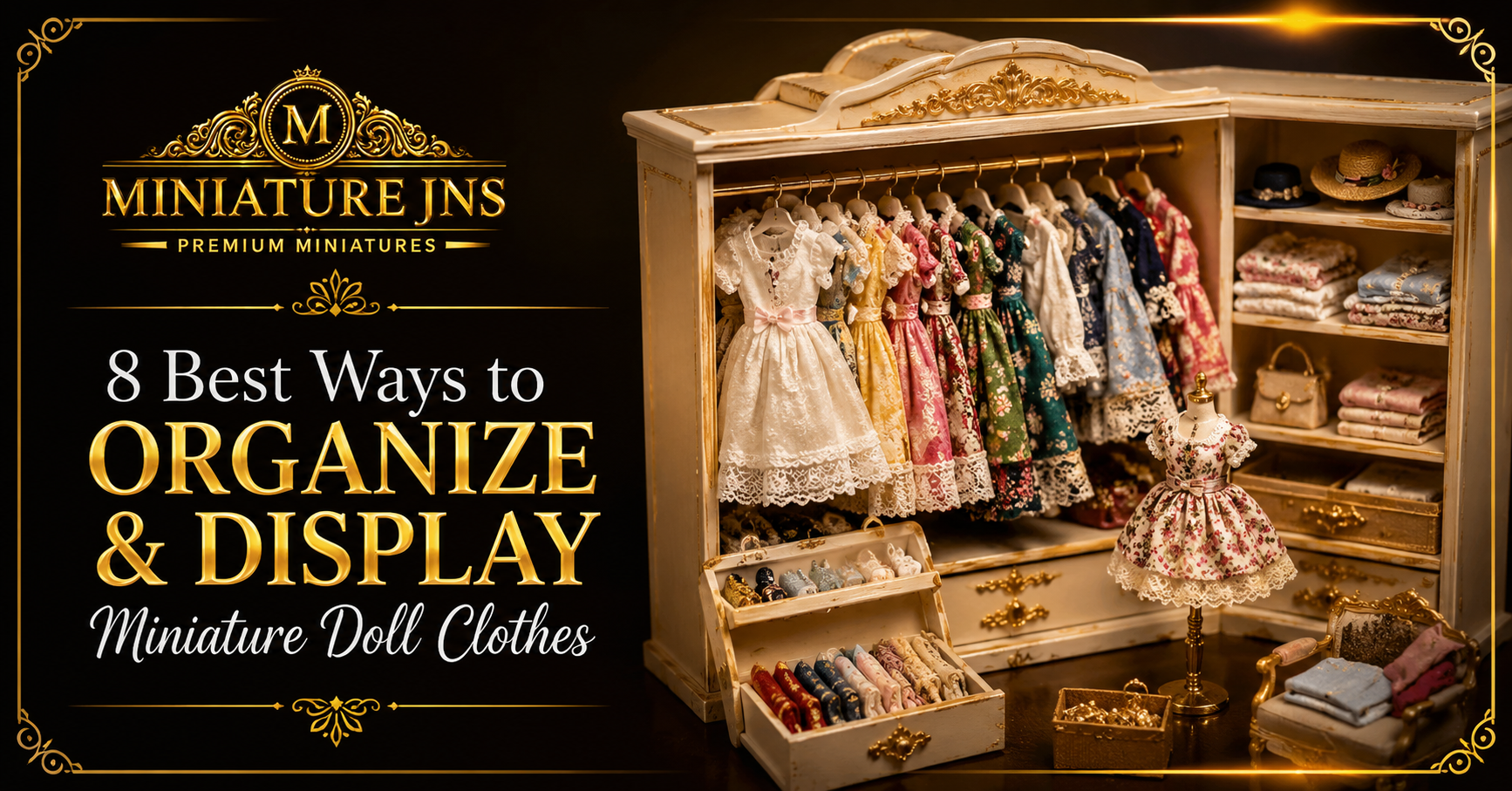
Miniature doll clothes multiply quietly. You buy a dress for one figure, then a coat, then a set of shoes, then a whole wardrobe for a scene you have not built yet. Before long you have a drawer full of tiny garments, half of which you cannot find when you need them.
Storage choices matter as well as tidiness. Light, unsuitable supports and changing storage conditions can damage textiles. A garment’s fabric, trims and condition should guide its care; there is no single damage timetable or resale-value rule for miniature clothes.
The good news is that the same solutions that protect your clothes also make them look wonderful on display. Miniature JNS carries clothing, shoes, and the storage pieces that work with them. Here are eight approaches worth using.
1. Sort by Scale Before Anything Else
Group garments by their stated scale and intended figure, then check actual measurements and fit. A scale label helps organize a collection but does not by itself establish that a garment will fit a particular doll.
Separate your collection by scale first — one-inch, half-inch, quarter-inch, playscale — and keep those groups physically apart in different boxes, drawers, or shelves. Label each one clearly. It takes an afternoon once and saves you time on every project afterward.
Within each scale, sort by figure type: adult women, adult men, children, babies. This second layer matters more than sorting by color or season, because when you are dressing a scene you are always looking for something that fits a particular doll.
2. Hang the Good Pieces on Tiny Hangers
Choose a support that suits the garment. A sound, lightweight piece may suit a padded hanger that supports its shoulders. Fragile, heavily decorated or stretchy garments may need flat support instead.
A tiny hanger can be a display prop without being suitable for long-term textile storage. Check its surface and support; bare wire can mark fabric or corrode. The Canadian Conservation Institute’s textile-care guidance explains these distinctions for textiles generally, rather than certifying any miniature hanger.
For a wardrobe display, compare the hanger’s width and the garment’s hanging length with the actual rail and interior space before buying. Check whether a rail is included and securely supported.
3. Fold and Stack Softer Items on Open Shelves
Flat support can suit knits and garments that cannot support their own weight. Keep folds to a minimum and avoid forcing a fragile garment into a display shape.
Use shallow, loosely arranged stacks for a scene. For storage, avoid pressure from other pieces and separate items with suitable supports; a fixed stack count does not establish that the arrangement is safe for every fabric.
On display, folded stacks look excellent inside an open wardrobe, on a shop shelf, or in a bedroom. Vary the stack heights and let one piece sit slightly out of line. A perfectly squared pile looks like a product photo; a slightly uneven one looks like a real linen closet.
4. Use Baskets and Hampers for the Overflow
Baskets are the most useful storage object in the hobby because they work equally well as real storage and as scene décor.
A basket of folded clothes in a bedroom, a hamper of laundry in a utility corner, or a woven bin of fabric in a sewing room all look natural while genuinely holding your spare pieces. Nobody looking at the scene knows the basket is doing double duty.
Choose a shape for the scene, then compare its usable interior space and opening with the garment. Browse the baskets collection and confirm the exact listing’s size, material and included contents before treating a piece as storage.
5. Check Wardrobe and Chest Storage Before Buying
If a garment belongs to a doll who lives in a particular room, store it in that room’s furniture. It is the simplest system there is, because the clothes are always where you need them.
If the exact listing confirms opening doors or drawers, check the usable interior dimensions and opening clearance against the garment. A closed decorative cabinet may provide no accessible storage. An open drawer with a supported garment can be a display detail, but the furniture’s finish and materials also matter for longer storage.
This approach also stops your finished scenes from feeling empty. A wardrobe that opens onto nothing is a missed opportunity — filling it turns a piece of furniture into evidence of a life.
6. Show Off Special Pieces on a Dress Form
A dress form or mannequin is the best way to display a single garment you are proud of. It shows the full silhouette, fills vertical space, and casts an interesting shadow.
Use it for a wedding dress, a period gown, a coat with good detail, or anything you made yourself. In a sewing room or a dress shop, a form with a half-finished garment pinned to it becomes the focal point of the whole scene. Pieces from the doll shoes and clothing range look particularly good displayed this way rather than hidden in storage.
If you have several forms, vary their heights and angles so the group has rhythm rather than standing in a row.
7. Store Long-Term Pieces Properly
For longer storage, use a container and support suited to the garment’s fabric, trims and condition. The Canadian Conservation Institute’s flat-storage note describes suitable boxes, minimal folding and padded folds for textiles generally.
Keep stored garments away from strong light and fluctuating heat or damp. Choose suitable archival supports; ordinary decorative tissue, an unknown plastic bag or an unlined wooden drawer is not automatically suitable. Do not attach tape or rubber bands to the garment.
Inspect the garment and its supports periodically. Avoid unnecessary handling or a rigid annual refolding rule; fragile, historic or valuable pieces may need advice from a textile conservator. Follow any maker-specific care instructions for modern miniature garments.
8. Keep an Inventory and Rotate Your Displays
A miniature clothing inventory can help at any collection size. Record the stated scale, actual garment measurements, which figure it fits, maker care instructions and storage location.
Add a photograph and note any unconfirmed measurements or materials. Keep display props and textile-care supplies separate in the record so that an attractive container is not mistaken for verified long-term storage.
Rotating displays is worth doing for two reasons. It keeps your scenes feeling fresh, and more practically, it limits how long any one garment sits under light. Swapping the clothes in a bedroom or shop every few months spreads the wear across the collection instead of concentrating it on your favorites.
Seasonal rotation is an easy rhythm to follow. Coats and boots in a hall in winter, lighter dresses and open windows in summer. It gives you a reason to revisit finished rooms, which is often when the best small improvements get made.
Organizing miniature clothing is not a chore separate from the hobby — done well, it is part of the hobby. Sort by scale, hang what should hang, fold what should fold, use baskets and furniture that earn their place in the scene, protect what you are not using, and keep track of it all. The result is a collection that stays in good condition and a set of rooms where the clothing looks like it belongs to someone.
